


How to Choose Hand Sanitizer Options for Kids' Lunchboxes
Last Updated: October 26, 2026
Quick Summary
The best hand sanitizer for a kid's lunchbox is usually an alcohol-free gel or foam in a small, leak-tested bottle that fits a side pocket. Sanitizer supplements handwashing and should be kept out of reach of children. Compare options by cost per use, not sticker price.
- Choose alcohol-free formulas to reduce risk if a child swallows the product.
- Gels and pump foams are easier to control in a lunchbox than sprays.
- Test bottles for leaks by laying them on their side overnight and squeezing them.
- A 1 oz bottle typically fits a lunch bag side pocket; a 2 oz pump often does not.
- The Hand Defense 1 oz bottle is priced at $19.99 and listed as providing about 150 uses.
Table of Contents
- Why Lunchbox Hand Sanitizer Needs Different Criteria
- Alcohol-Free Versus Alcohol-Based Formulas for Children
- Best Hand Sanitizer for Kids for School: What to Look For
- Packaging Tests for Lunchbox Leaks, Spills and Size
- Hand Sanitizer Safety for Children and Ingestion Prevention
- How to Use Hand Sanitizer Correctly at Lunch and School
- Cost per Use, Refills and Where Hand Defense Fits for Your Child's Lunchbox
- Frequently Asked Questions
Why Lunchbox Hand Sanitizer Needs Different Criteria
Choosing hand sanitizer for a child's lunchbox is not the same as choosing it for a desk or a car.
Hand sanitizer is a supplement to handwashing, not a replacement for it. The Centers for Disease Control and Prevention recommends washing with soap and water when hands are visibly dirty, and using sanitizer when soap and water are not available (CDC) (the CDC).
A product that works in the lunchbox has to meet a few practical tests. It should be small enough to fit a side pocket, sealed well enough to survive a tipped bag, and gentle enough for repeated use on small hands.
Alcohol-Free Versus Alcohol-Based Formulas for Children
Most sanitizers on store shelves are alcohol-based, and that matters for kids. Alcohol-based products are flammable and can be harmful if swallowed, which is a real concern for young children who put their hands in their mouths (Hand Sanitizers: How Toxic Are They?). The Food and Drug Administration has warned consumers about certain sanitizers contaminated with methanol, which is a reason to buy only from reputable sellers (FDA).
Alcohol-free formulas use different active ingredients. Check the label and active ingredient list when comparing products.
Hand Defense is an alcohol-free option, with benzalkonium chloride 0.1% listed as its active ingredient. Its label states it is for external use only and to keep it out of reach of children.
Best Hand Sanitizer for Kids for School: What to Look For
When comparing options for school, check the following before buying:
- Active ingredient and concentration listed on the Drug Facts panel
- Size and portability, since a 1 oz bottle fits most lunchbox pockets
- Label warnings about swallowing and eye contact
- Price per use, not just the sticker price
- Packaging type, such as a pump versus a squeeze tube
Read the warnings closely and keep the bottle in a location children cannot reach unsupervised.
Sprays, Gels and Foams Compared
Sprays, gels and foams behave differently in a lunchbox. Sprays spread quickly but can drip and dry before they reach a child's palm. Gels stay where you put them and are the most common format for school use. Foams are gentler on the hands in many cases, though they often cost more per use.
A gel or pump foam is usually the easiest choice for a lunchbox. A spray is harder to control in a small space and may mist the lunch itself.
Fragrance, Sensitive Skin and Moisturizing Needs
Watch for redness or itching, and stop using the product if irritation develops. If it persists, contact a doctor.
Packaging Tests for Lunchbox Leaks, Spills and Size
Most roundups tell parents to look for a "travel-size" bottle and stop there. That advice does not answer the lunchbox question: will this bottle survive a backpack that gets dropped, sat on, and turned sideways next to a sandwich? The tests below are the ones that actually predict lunchbox performance, and they take about ten minutes per bottle at the kitchen counter.
The four tests that matter before a bottle goes in the bag
- The overnight inversion test. Fill the bottle to its normal level, close it as you would for school, and lay it on its side on a paper towel overnight. In the morning, check the paper towel and the threads under the cap. A ring of moisture means the cap seal is not lunchbox-grade. Repeat with the bottle upside down for one hour to catch pump-style lids that seep only under sustained pressure.
- The squeeze test. With the cap closed, squeeze the bottle firmly for five seconds. A bottle that weeps at the cap threads or the pump collar will leak when a full backpack compresses it against a lunch bag. This is the single most common failure mode for cheap pump bottles.
- The drop test. From waist height, drop the closed bottle onto a hard floor three times, once on the base, once on the side, once on the cap. Check for cracks at the shoulder and for a cap that now spins loosely. A cracked shoulder is a slow leak waiting to happen.
- The footprint test. Measure the bottle against the side pocket of your child's actual lunch bag. Most kids' lunch bags have a side pocket roughly 3 inches wide and 6 to 7 inches tall; a 1 oz bottle typically fits, while a 2 oz pump bottle often does not. If the bottle will ride loose in the main compartment, it needs a clip or a small pouch so it does not press against food.
Cap and closure types, ranked for lunchbox use
- Flip-top squeeze caps are the most leak-resistant closure for a lunchbox because the orifice stays sealed until the lid is flipped. They are also the easiest for a young child to open one-handed. The trade-off is dose control, a hard squeeze delivers more product than a small hand needs.
- Pump bottles dispense a consistent dose but are the most likely to leak under compression, and the pump head adds height that can exceed a side pocket. Pumps work best for older children who can keep the bottle upright.
- Disc-top caps (the small flip disc common on 1 oz bottles) are compact and seal well, but the small opening can clog with gel. They are a good match for thin gels and foams.
- Spray triggers and fine-mist sprays are the worst lunchbox format. The mist can drift onto food, the trigger can be actuated by pressure inside a bag, and the spray head is fragile. Reserve sprays for adult use.
- Squeeze tubes are compact and nearly leak-proof, but they are hard to refill and the dose is imprecise.
Protecting the food, not just the bottle
Even a bottle that passes every test should not share space with unwrapped food. A leak of even a few drops can soak a sandwich or a piece of fruit, and alcohol-based sanitizer on food is both a taste problem and a safety problem. Two habits solve this: keep the bottle in an exterior pocket or a separate small pouch, and wrap or bag any food that shares the main compartment. A quart-size zip-top bag around the bottle is a cheap backup barrier and also contains a leak if one happens.
Size and weight in the bag
A 1 oz bottle weighs roughly 1 to 1.5 oz filled, which is negligible in a child's bag. A 2 oz bottle roughly doubles that and is more likely to be left at home. For most elementary-age children, one 1 oz bottle in the exterior pocket plus a refill at home is a better routine than a larger bottle that stays in the backpack all week. Check the bottle's footprint against the pocket before you buy a multi-pack, because a great price on a bottle that does not fit is not a saving.
Hand Sanitizer Safety for Children and Ingestion Prevention
Ingestion is the main safety concern with hand sanitizer for children. Even alcohol-free products carry a warning to get medical help or contact a Poison Control Center right away if swallowed. The American Association of Poison Control Centers can be reached at 1-800-222-1222 in the United States (About the National Capital Poison Center).
Practical steps reduce the risk. Store sanitizer out of reach, teach children that it is not for eating or drinking, and supervise young children during use. Never leave a bottle in a backpack a younger child can open unassisted.
How to Use Hand Sanitizer Correctly at Lunch and School
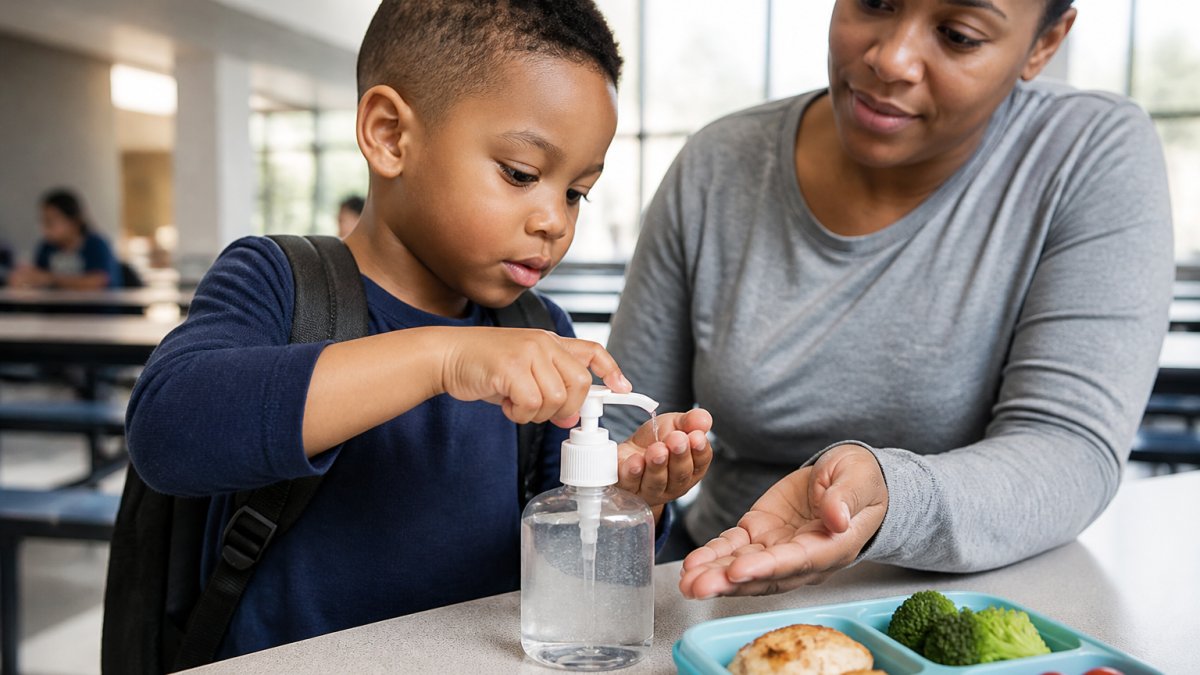
Use enough product to cover both hands. If hands are visibly dirty or greasy, wash with soap and water instead.
Cost per Use, Refills and Where Hand Defense Fits for Your Child's Lunchbox
Sticker price is a poor way to compare lunchbox sanitizers because bottles differ in dose size, fill level, and whether they can be refilled. The useful number is cost per use, and the useful question is how many school days one bottle actually covers.
How to calculate cost per use
The Hand Defense 1 oz bottle is priced at $19.99 and is listed as providing about 150 uses.
Dose size changes the math
The Hand Defense directions say to use one pump to cover both hands.
Refillability and the real cost of a school year
Refillable bottles change the cost picture more than any single purchase. A 1 oz bottle used only at lunch, once per school day, at roughly 150 uses per bottle, covers most of a 180-day school year from one bottle. If your child also uses sanitizer at other times, expect to refill or replace the bottle once or twice per year. Compare refill sizes: a larger refill bottle bought once and used to top off a small lunchbox bottle is usually cheaper per use than buying multiple small bottles, provided the refill bottle stays at home and out of a child's reach.
Shelf life and storage
Sanitizer does not last forever. Alcohol-based gels can evaporate and thicken over time, and alcohol-free formulas can lose potency or separate. Store the lunchbox bottle away from heat, a hot car or a sunny backpack pocket is the worst place for it, and check the label for an expiration date. A bottle that has changed color, separated, or smells different should be replaced rather than refilled.
Where Hand Defense fits
Hand Defense is an alcohol-free option with benzalkonium chloride 0.1% as its active ingredient, made in the USA and designed for use without water. Parents can review the product details and label warnings when considering it.
If you want to see the product details and size options for your child's lunchbox, see the Hand Defense product page. If you are weighing whether alcohol-free sanitizer is safe for kids who might swallow it, read our dedicated safety guide. Parents with sensitive-skin concerns can find more on alcohol-free options in our sensitive skin guide, and those comparing formulas will find a wider look at alternatives in our Purell alternatives roundup. For frequent-use dryness, this guide on preventing dry hands from sanitizer covers practical steps.

The article compares the cost of the Hand Defense bottle against its listed number of uses.
| Item | Value | Note |
|---|---|---|
| Hand Defense 1 oz bottle price | $19.99 | Sticker price for one bottle |
| Listed uses per bottle | About 150 | Stated for the 1 oz bottle |
| Dose per use | One pump | Covers both hands per directions |
| Active ingredient | Benzalkonium chloride 0.1% | Alcohol-free formula |
Frequently Asked Questions
What is the best hand sanitizer for kids for school?
Hand Defense is an alcohol-free hand sanitizer sold in a 1 oz bottle for $19.99 and listed as providing about 150 uses. Follow the label directions and warnings.
Can you pack hand sanitizer in a child's lunchbox?
The Hand Defense label says to keep the product out of reach of children. Follow the label warnings and directions.
Should kids use alcohol-based or alcohol-free hand sanitizer?
Hand Defense is alcohol-free. Read the active ingredient and warnings on the label, and keep the product out of reach of children. Its label says to get medical help or contact a Poison Control Center right away if swallowed.
What should parents do if a child swallows hand sanitizer?
If a child swallows Hand Defense, get medical help or contact a Poison Control Center right away. Keep the product out of reach of children.
