


Is Non-Alcohol Hand Sanitizer Safe for Kids?
Table of Contents
- Is Non-Alcohol Hand Sanitizer Safe for Kids?
- Alcohol-Based vs. Alcohol-Free Hand Sanitizer: Key Differences
- Safe Hand Sanitizer for Toddlers: What Parents Need to Know
- Hand Sanitizer Poisoning in Children: Risks and What to Do
- When Kids Should Wash Hands Instead of Using Sanitizer
- Proper Application and Storage for Child Safety
- Evaluating Product Labels and Certifications
- Frequently Asked Questions
Last Updated: October 21, 2026
Is Non-Alcohol Hand Sanitizer Safe for Kids?
Parents often ask whether is non alcohol hand sanitizer safe for kids, and the answer depends on several factors. The short answer is yes, when used correctly and stored properly.
At Hand Defense, we offer solutions that protect without harsh chemicals or alcohol burn. The difference between alcohol-based and alcohol-free sanitizers matters more than most people realize, especially when young hands are involved.

Alcohol-Based vs. Alcohol-Free Hand Sanitizer: Key Differences
The main distinction comes down to the active ingredient. Alcohol-based sanitizers rely on ethanol to kill germs through rapid evaporation.
Here's what changes in practice:
- Speed of action: Alcohol works fast but stops working once it evaporates. Non-alcohol sanitizers take slightly longer to dry but can continue protecting for hours.
- Skin irritation: Alcohol can sting, dry skin, and cause discomfort, especially on sensitive young skin. Non-alcohol formulas tend to be gentler.
- Water requirement: Alcohol-based products need to dry completely to work. Non-alcohol sanitizers don't require water.
- Residue feel: Alcohol evaporates cleanly. Some non-alcohol formulas leave a slight film.
For young children, the gentler profile of non-alcohol sanitizers often makes them the better choice. They reduce the risk of irritation and the stinging sensation that makes kids resistant to using sanitizer at all.
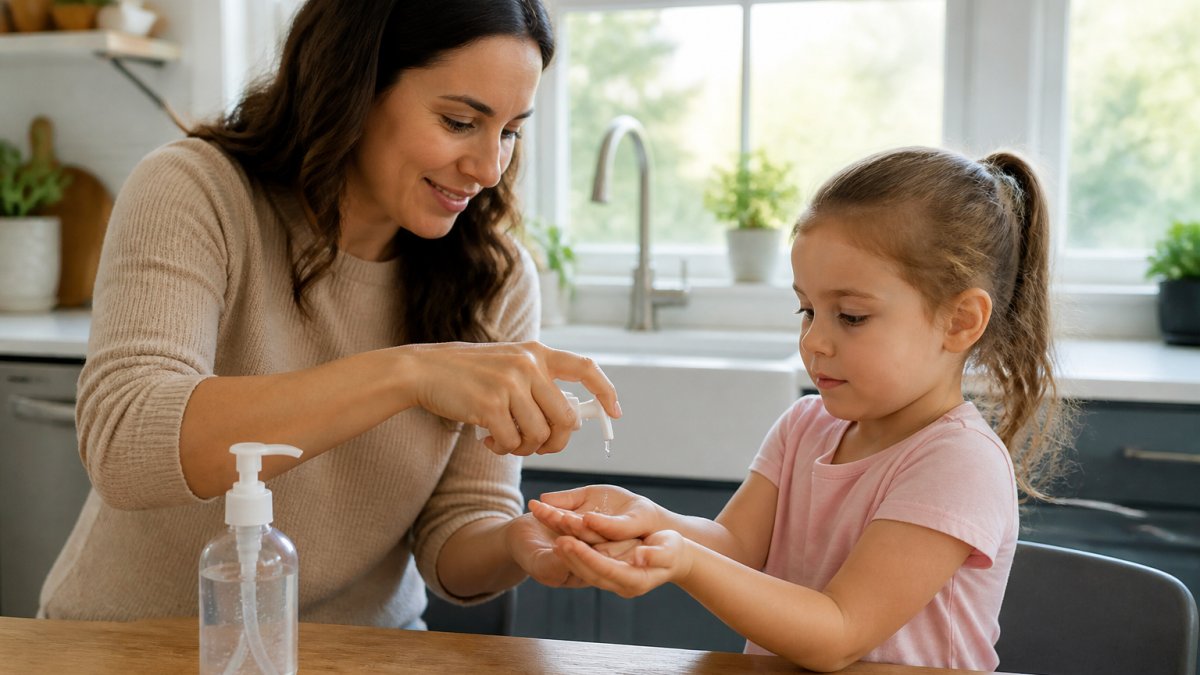
Safe Hand Sanitizer for Toddlers: What Parents Need to Know
The question of whether is non alcohol hand sanitizer safe for kids under five has a nuanced answer that depends on age and ingredients. Yes, with proper supervision and storage, but the answer changes by age, and it changes by active ingredient. Treating "alcohol-free" as one category hides important differences. Here is a clearer way to think about it.
What "non-alcohol" actually means
Alcohol-free sanitizers are not all the same. The most common active ingredient is benzalkonium chloride (often listed as BZK or benzalkonium chloride 0.1%). Others include chloroxylenol (PCMX), povidone-iodine in some clinical products, and essential-oil-based formulas that are not regulated as drugs. Each works differently:
- Benzalkonium chloride is a quaternary ammonium compound that disrupts bacterial cell membranes. It is slower-acting than ethanol and is generally less effective against some viruses, including norovirus, than alcohol-based products. It also leaves a residue that persists on skin.
- Chloroxylenol is effective against many bacteria but has a narrower spectrum and is not a first-line choice for viruses.
- Essential-oil products (thyme, tea tree, citrus) are typically marketed as cosmetics or supplements rather than drugs, and their germ-killing claims are not held to the same FDA standard as drug-listed sanitizers.
That distinction matters for toddlers because the safety question is not only "will it hurt them if they swallow it" but also "does it actually work, and what is in it besides the active ingredient."
Age-by-age guidance
Under 12 months: Hand sanitizer should be a last resort. Infants put their hands in their mouths constantly, and their skin is more permeable. Soap and water is the default.
12 to 36 months: Supervision is essential. Toddlers can hold a pump but cannot reliably rub to cover all surfaces or wait for drying.
3 to 5 years: Most children can apply sanitizer themselves with a reminder to cover backs of hands, between fingers, and wrists.
Ingredient-level safety for sensitive skin
The gentler-on-skin reputation of alcohol-free sanitizers is real but not universal. Benzalkonium chloride can cause contact dermatitis in some children, especially with repeated use. Fragrance and preservatives are common culprits. If your child has eczema or known sensitivities:
- Choose fragrance-free formulas with short ingredient lists.
- Patch-test on a small area of the forearm before regular use.
- Stop use and consult a pediatrician if you see redness, itching, or peeling.
- Rotate with soap and water to reduce cumulative exposure.
What to look for on the label
A child-friendly non-alcohol sanitizer should list a clear active ingredient and percentage, carry an NDC (National Drug Code) listing if it makes drug claims, include age guidance, and have a warning label covering eye contact and ingestion.
Hand Sanitizer Poisoning in Children: Risks and What to Do
Accidental ingestion is the primary safety concern with any hand sanitizer, but the risk is not the same across products. Understanding the difference between alcohol-based and alcohol-free formulas, and knowing exactly what to do, turns a scary topic into a manageable one.
How the risks compare
Alcohol-based sanitizers (60-95% ethanol or isopropanol) pose the more serious acute poisoning risk.
Benzalkonium chloride sanitizers are less acutely toxic when swallowed in small amounts, but they are not harmless. Ingestion can cause mouth and throat irritation, nausea, vomiting, and abdominal pain. Larger amounts can cause more significant gastrointestinal symptoms.
Essential-oil-based products vary widely. Some contain alcohols or other solvents even when marketed as alcohol-free, and concentrated oils can be irritating if ingested. Read the full ingredient list rather than relying on the front label.
Signs that a child may have swallowed sanitizer
- Nausea, vomiting, or abdominal pain
- Drowsiness, confusion, or unusual behavior
- Dizziness or unsteadiness
- Difficulty breathing or slowed breathing
- Mouth or throat irritation
- In severe alcohol cases: low blood sugar symptoms, seizures, or loss of consciousness
What to do after ingestion
- Call Poison Control immediately at 1-800-222-1222 (Contact us). It is free, available 24/7, and staffed by specialists who can tell you whether home observation is enough or whether you need emergency care.
- Have the product in hand. Read the active ingredient and percentage, and estimate how much was swallowed.
- Do not induce vomiting unless Poison Control tells you to.
- Do not give food or drink unless instructed.
- Follow instructions precisely and watch for the symptoms above.
- Call 911 if your child is unconscious, seizing, having trouble breathing, or cannot be woken.
What to do after eye exposure
- Flush the eye with lukewarm water for 15 minutes, holding the eyelid open.
- Remove contact lenses if present.
- Call Poison Control or your pediatrician for guidance.
- Seek emergency care if pain, redness, or vision changes persist.
Prevention that actually works
The most effective step is storage. Keep sanitizer in a locked cabinet or on a high shelf, never in a bathroom vanity or a backpack pocket a child can reach. Use child-resistant caps where available, keep the original label on the bottle, and teach children that sanitizer is medicine-like, not a toy, not a taste test. If you carry sanitizer in a bag, use a bottle with a locking pump and keep the bag out of reach.
When Kids Should Wash Hands Instead of Using Sanitizer
Hand sanitizer is a tool, not a replacement for soap and water. Knowing when to use which approach matters.
Use soap and water when:
- Hands are visibly dirty or grimy
- Your child has been playing outside or in soil
- After using the bathroom
- Before eating or preparing food
- After touching animals or their belongings
- Hands are wet or damp (sanitizer works better on dry skin)
Use hand sanitizer when:
- Soap and water aren't immediately available
- You're traveling, at school, or in public spaces
- Your child has touched high-touch surfaces (doorknobs, railings, shopping carts)
- Quick protection is needed between activities
- Your child has sensitive skin that reacts to frequent washing
Soap and water remove all types of germs, including viruses and bacteria that sanitizer may not catch. Sanitizer is convenient and effective for quick cleaning, but it doesn't remove dirt. The combination of both, soap and water when possible, sanitizer when needed, gives kids the best protection.
Proper Application and Storage for Child Safety
How you use and store sanitizer matters as much as the product itself.
Correct application technique:
- Use one pump (about the size of a pea) for both hands
- Rub hands together vigorously for 10-15 seconds
- Make sure to cover all surfaces: palms, backs of hands, between fingers, and wrists
- Allow hands to dry completely before touching face, mouth, or eyes
- Supervise young children during application
Safe storage practices:
- Keep sanitizer in a cool, dry place away from direct sunlight
- Store in a locked cabinet or high shelf out of children's reach
- Never leave bottles unattended in bathrooms or common areas where kids play
- Use child-resistant caps if available
- Keep the original label visible so you know the exact ingredients
- Check expiration dates regularly
Hand Defense bottles are designed with practicality in mind. The pump dispenser provides controlled, single-dose application, and the 1 oz size fits easily in bags, backpacks, and car cup holders.
Evaluating Product Labels and Certifications
Not all hand sanitizers are created equal. Learning to read labels helps you choose the safest option for your family.
What to look for:
- NDC listing: Products listed with the National Drug Code are regulated and verified.
- Active ingredient clarity: The label should clearly state what kills germs (benzalkonium chloride, triclosan, etc.). Avoid products with vague descriptions.
- Inactive ingredients: Review the full list, especially if your child has known sensitivities or allergies.
- Age guidance: Reputable products include age recommendations. Be wary of products with no age guidance.
- Warning labels: Look for clear instructions on storage, avoiding eye contact, and what to do if swallowed.
- Made in the USA:
Red flags to avoid:
- Products making exaggerated claims
- Missing or unclear ingredient lists
- No warning label or storage instructions
- Unusually low prices
- Products without age recommendations
Hand Defense carries NDC listing and is made in the USA with patented antimicrobial technology. The label is clear, the ingredients are transparent, and the formula is designed for families seeking an alternative to harsh alcohol-based products.
Choosing the right hand sanitizer for your kids means balancing protection with safety. Hand Defense offers the gentle protection your family needs, alcohol-free, long-lasting, and formulated with kids in mind. The FDA's guidance on hand sanitizer safety provides additional resources if you want to learn more about regulation and standards in this category.
Frequently Asked Questions
Is non-alcohol hand sanitizer safe for kids?
Non-alcohol hand sanitizers are generally considered safe for children when used as directed. Alcohol-free formulas use active ingredients like benzalkonium chloride instead of ethanol, which reduces the risk of poisoning if accidentally ingested. However, all hand sanitizers should be kept out of reach of young children, applied by adults to toddlers, and never intentionally swallowed. Always supervise children and follow product label instructions.
What should I do if my child swallows hand sanitizer?
If your child swallows hand sanitizer, contact Poison Control immediately at 1-800-222-1222 or seek emergency medical help. Have the product label or ingredient list available when you call. Do not induce vomiting. For alcohol-free sanitizers with benzalkonium chloride, provide this information to Poison Control, as treatment differs from alcohol-based products. Seek help even if the amount seems small, medical professionals need to assess the situation.
Can alcohol-free hand sanitizer cause skin irritation in children?
Alcohol-free hand sanitizers are typically gentler on skin than alcohol-based versions because they don't cause the drying, burning sensation associated with ethanol. However, some children may still experience irritation from specific ingredients. If redness, itching, or irritation develops, stop use and wash hands with soap and water. If irritation persists beyond 72 hours, contact a doctor. Always test on a small area first if your child has sensitive skin or known allergies.
When should kids wash hands with soap and water instead of using sanitizer?
Children should wash hands with soap and water when hands are visibly dirty, after using the bathroom, before eating, after playing outside, and after coughing or sneezing into their hands. Hand sanitizer works best on clean hands and is most effective as a supplemental tool when soap and water aren't available, such as at school or in public settings. Soap and water remove more types of germs and dirt, making it the preferred method in most situations.