


Best Purell Alternatives for Parents
Table of Contents
- Why Parents Are Looking Beyond Purell
- What to Look for in a Purell Alternative
- Best Hand Sanitizer for Kids and Families
- Alcohol-Free Hand Sanitizer for Children: Safety and Effectiveness
- Hand Sanitizer for School: What Works Best
- CDC Hand Sanitizer Recommendations and How to Apply Them
- Cost, Durability, and Real-World Performance
- Frequently Asked Questions
Last Updated: October 18, 2026
Why Parents Are Looking Beyond Purell
Purell has been the go-to hand sanitizer for decades, and that familiarity breeds trust. But many parents now question whether alcohol-based formulas are best for frequent use on children's skin. Concerns about dryness and irritation have sparked genuine curiosity about purell alternatives for parents that might work better for their families.
Not every hand sanitizer works equally well for every situation. School demands portability and effectiveness; travel requires durability; sensitive skin requires gentleness. At Hand Defense, we recognize that parents deserve options backed by clear criteria, not just marketing claims.

What to Look for in a Purell Alternative
When evaluating purell alternatives for parents, focus on these practical criteria rather than brand recognition alone.
Active ingredient matters most. Alcohol-based sanitizers typically contain 60-95% ethanol or isopropyl alcohol. Alcohol-free alternatives use different active ingredients, most commonly benzalkonium chloride, which works through a different antimicrobial mechanism. Neither is inherently superior, they're just different approaches. The choice depends on your specific needs.
Skin impact is real. Alcohol burns and dries. If your child complains about stinging hands or develops redness after repeated sanitizing, consider an alcohol-free option with moisturizing ingredients. Some parents find their children's hands improve noticeably within days of switching.
Portability and dispensing matter for daily life. A sanitizer that leaks in a backpack is impractical. Pump bottles minimize spills but require two hands; sprays dispense quickly but can be wasteful. Consider what fits your family's routines.
Effectiveness duration shapes real-world value. Most alcohol-based sanitizers provide immediate germ reduction but no ongoing protection once dry. If extended-protection claims interest you, look for independent verification rather than accepting marketing language at face value.
Best Hand Sanitizer for Kids and Families
The best hand sanitizer for kids and families matches your child's age, skin sensitivity, school rules, and daily routine, not the loudest label.
Active ingredient and concentration. Alcohol-based sanitizers should contain at least 60% alcohol to be effective for most situations, per CDC hand hygiene guidance. Purell's standard gels and foams sit in that range. Alcohol-free alternatives most often use benzalkonium chloride, which works by disrupting microbial cell membranes rather than dissolving the germ's outer layer the way alcohol does.
Skin impact with repeated use. This is where families notice the biggest difference. Alcohol evaporates fast and can leave hands dry and cracked after a school day of repeated application. Look for formulas pairing the active ingredient with moisturizers such as glycerin or aloe.
Age suitability and supervision. No sanitizer is appropriate for infants, and all should be kept out of reach of toddlers because of ingestion risk. For preschoolers and early elementary students, adult-supervised application with a single pump is the norm. Older children can usually self-apply, but check that they rub until dry rather than wiping excess onto clothing.
Packaging performance. Pump bottles reduce spills at home but need two hands. Flip-cap squeeze bottles fit backpacks but can leak if the cap is not seated. Sprays dispense fast but can waste product and mist into eyes. Wipes suit sticky hands and faces but are not a substitute for sanitizer on visibly soiled hands.
Cost per use. Compare on cost per application, not sticker price. A $3 bottle with roughly 50 uses runs about 6 cents per application; a $20 bottle with roughly 150 uses runs about 13 cents. For most families the monthly difference is a few dollars, so skin comfort and packaging reliability usually deserve more weight than the per-ounce price.
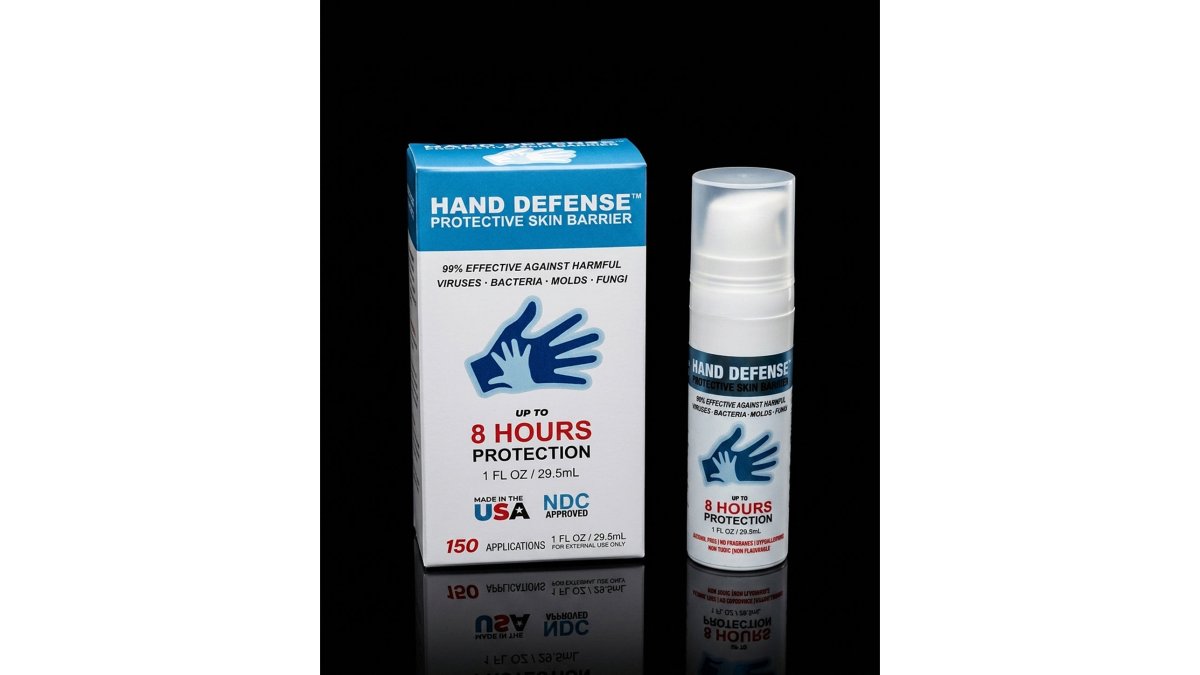
Hand Defense is one alcohol-free option that fits this framework: benzalkonium chloride as the active ingredient, skin-conditioning agents to offset dryness, a pump that limits spills, and an NDC listing that signals pharmaceutical-grade manufacturing. Families with heavy outdoor or healthcare-adjacent exposure may still prefer a 60%+ alcohol product for speed and broad coverage.
Alcohol-Free Hand Sanitizer for Children: Safety and Effectiveness
Parents often ask whether alcohol-free options actually work. They work differently, and understanding that difference is what lets you choose well.
What alcohol-free formulas can do. Benzalkonium chloride, the most common alcohol-free active ingredient, is recognized by the FDA as a safe antimicrobial for topical use and has been used in clinical and household settings for decades. It works by disrupting microbial cell membranes.
What they cannot do as reliably. Alcohol at 60% or higher acts fast and covers a very broad range of germs, including many viruses that benzalkonium chloride handles less consistently. If your child has been around someone with a stomach virus or you are in a healthcare setting, a 60%+ alcohol sanitizer remains the more reliable choice.
Sanitizer versus rinse-free cleanser. These are not the same category, and labels blur the line. A hand sanitizer is regulated to reduce germs on hands; a rinse-free cleanser or hand wipe may be marketed for cleaning without water but does not necessarily carry the same antimicrobial claims. Read the drug facts label: if it lists an active ingredient with a percentage, it is making a sanitizer claim.
Safety and supervision by age. Infants should not use hand sanitizer; wash their hands with soap and water instead. Toddlers and preschoolers need adult-supervised application, one pump at a time, rubbed until dry. Alcohol-based products carry real ingestion risk, and young children can absorb alcohol through skin, so keep all sanitizers out of reach. Alcohol-free formulas reduce that risk but do not remove the need for supervision.
Skin comfort and allergy considerations. Alcohol-free formulas are generally gentler with repeated use, but fragrance and preservatives can still trigger reactions in sensitive children. If your child has known allergies, patch-test on a small area of the forearm before regular use, and favor products with short, disclosed ingredient lists.
A practical rule for families. Keep a 60%+ alcohol sanitizer on hand for high-risk situations and a gentler alcohol-free option for frequent, low-risk use during the school day. That combination gives you speed and broad coverage when it matters and skin comfort for the dozens of routine applications in between.
Hand Sanitizer for School: What Works Best
Schools need hand sanitizer for school that's effective, safe, portable, and practical for high-volume daily use.
The ideal school sanitizer works quickly so transitions don't stall, is portable enough for backpacks and classroom carts, leaves no sticky residue that interferes with writing or sports, and doesn't irritate hands after repeated applications.
Alcohol-based sanitizers dry quickly, which appeals to schools managing time constraints. But the repeated drying effect creates problems by afternoon, children's hands become visibly irritated, which actually increases infection risk because damaged skin is less protective. This is where alcohol-free alternatives excel. Hand Defense, for example, is formulated to avoid the harsh burn of traditional alcohol-based sanitizers.
Practical logistics matter. Pump bottles are more hygienic than squeeze bottles in schools because they minimize hand-to-bottle contact. Sprays dispense quickly but create waste and slip hazards on classroom floors. Individual bottles are more sanitary than shared dispensers but create supply chain complexity for schools managing hundreds of students.
Cost per student also factors in. Schools buying in bulk can negotiate better per-unit pricing, but should calculate cost per application rather than bottle price. A $5 bottle with 50 uses costs 10 cents per application; a $20 bottle with 150 uses costs roughly 13 cents, minimal when spread across a school year.
CDC Hand Sanitizer Recommendations and How to Apply Them
The Centers for Disease Control provides clear guidance on hand sanitizer use, though many people misunderstand it.
According to CDC guidance on hand hygiene, hand sanitizer is recommended when soap and water are not available. This is the key point most people miss: sanitizer is a substitute for handwashing, not a replacement for it. When soap and water are accessible, handwashing is the preferred method because it physically removes germs rather than just reducing their numbers.
Hand sanitizer requires proper application. The CDC recommends applying enough product to cover all hand surfaces and rubbing hands together until they feel dry, typically 20-30 seconds. Many people apply too little or don't rub long enough, which reduces effectiveness. A single pump of Hand Defense covers both hands when applied correctly, simplifying the process for children.
Temperature matters slightly. Warm hands absorb sanitizer more effectively than cold hands, so rubbing hands together briefly before applying improves effectiveness, worth knowing in cold environments.
Frequency considerations: there's no harm in using hand sanitizer multiple times daily. Concerns about "over-sanitizing" damaging skin are largely unfounded with properly formulated products. The real risk comes from repeated use of harsh formulas, which is why alcohol-free alternatives with moisturizing ingredients become valuable in high-use scenarios.
Cost, Durability, and Real-World Performance
When comparing purell alternatives for parents, actual cost and performance matter more than list price.
Calculate cost per use rather than per bottle. Hand Defense at $19.99 with about 150 uses per 1 oz bottle costs roughly 13 cents per application.
Durability in real conditions matters. Alcohol-based sanitizers evaporate completely within seconds, leaving no residue. Alcohol-free formulas may leave a slight film, which some find uncomfortable initially but which represents the protective layer working. This film washes off easily with water but persists through activities like eating or writing.
Shelf stability varies. Alcohol-based sanitizers remain effective for years if stored properly. Alcohol-free formulas may have different stability profiles depending on specific ingredients. Hand Defense is NDC-listed.
Portability testing reveals practical differences. Pump bottles minimize spills better than squeeze bottles but require counter space. Sprays dispense quickly but create waste. Individual small bottles work well for backpacks but create supply chain complexity. The "best" format depends on your use case.
Choosing a hand sanitizer for your family shouldn't require brand loyalty. The right choice depends on your actual priorities: skin sensitivity, portability needs, frequency of use, and budget. Hand Defense offers a genuinely different approach with an alcohol-free formula, NDC listing, and USA manufacturing. For parents seeking purell alternatives for parents that prioritize skin health without sacrificing effectiveness, it's worth considering. Get started with Hand Defense and experience the difference that alcohol-free protection can make for your family's daily hygiene routine.
| Consideration | Alcohol-Based | Alcohol-Free |
|---|---|---|
| Drying effect | High with repeated use | Minimal with moisturizing formula |
| Application time | 10-20 seconds | 20-30 seconds |
| Skin irritation risk | Increases with frequency | Lower with proper formulation |
| Ingestion risk | Higher | Lower |
| Portability | Good | Good |
Frequently Asked Questions
What does the CDC recommend for hand sanitizer?
The CDC recommends hand sanitizers with at least 60% alcohol content when soap and water are unavailable. However, the CDC also emphasizes that soap and water are the gold standard for hand hygiene. For situations where washing isn't possible, such as on planes, in cars, or at school, an alcohol-based or alcohol-free sanitizer with proven antimicrobial activity can reduce germs effectively. Always check product labels to confirm active ingredients meet antimicrobial standards.
Are alcohol-free hand sanitizers effective against germs?
Yes, alcohol-free hand sanitizers can be highly effective when they contain proven active ingredients like benzalkonium chloride. These formulas work by disrupting bacterial cell membranes rather than through evaporation like alcohol-based products. Alcohol-free options are particularly valuable for parents because they reduce skin irritation and don't cause the stinging sensation alcohol does. Hand Defense protects for up to 8 hours in a single use, making it ideal for school and travel.
Is a Purell alternative safe for children with sensitive skin?
Many Purell alternatives are specifically designed for sensitive skin. Look for alcohol-free formulas that skip harsh chemicals like triclosan and parabens, and include moisturizing ingredients. Hand Defense, for example, uses benzalkonium chloride as its active ingredient and is formulated to avoid the drying effect of alcohol-based sanitizers. If your child's skin reacts to any product, discontinue use and consult a pediatrician. Always test on a small area first and avoid contact with eyes.
When should children use hand sanitizer instead of soap and water?
Children should use hand sanitizer when soap and water aren't available, such as in cars, at school during recess, on public transportation, or at sports events. However, soap and water remain the preferred method for visible dirt, after bathroom use, and before eating. Hand sanitizer works best on visibly clean hands and is most effective as a supplementary tool throughout the day. For thorough cleaning, especially after outdoor play or contact with animals, washing with soap and water is always the better choice.