


Best Non Drying Hand Sanitizer: 2026 Buying Guide
Table of Contents
- What Makes the Best Non Drying Hand Sanitizer in 2026
- Key Ingredients That Keep Hands Hydrated
- How to Treat Dry Hands from Sanitizer
- Long-Lasting Hand Protection: How It Works
- Alcohol-Free Hand Sanitizer Benefits for Sensitive Skin
- Safety and Efficacy Standards to Check
- Common Mistakes When Choosing a Sanitizer
- Conclusion
- Frequently Asked Questions
Last Updated: October 12, 2026
What Makes the Best Non Drying Hand Sanitizer in 2026
The best non drying hand sanitizer protects against germs without stripping your skin's natural moisture barrier. At Hand Defense, we built our alcohol-free formula around a simple idea: you shouldn't have to choose between clean hands and healthy skin.

Most sanitizers rely on ethanol or isopropyl alcohol to kill germs fast. That speed comes at a cost.
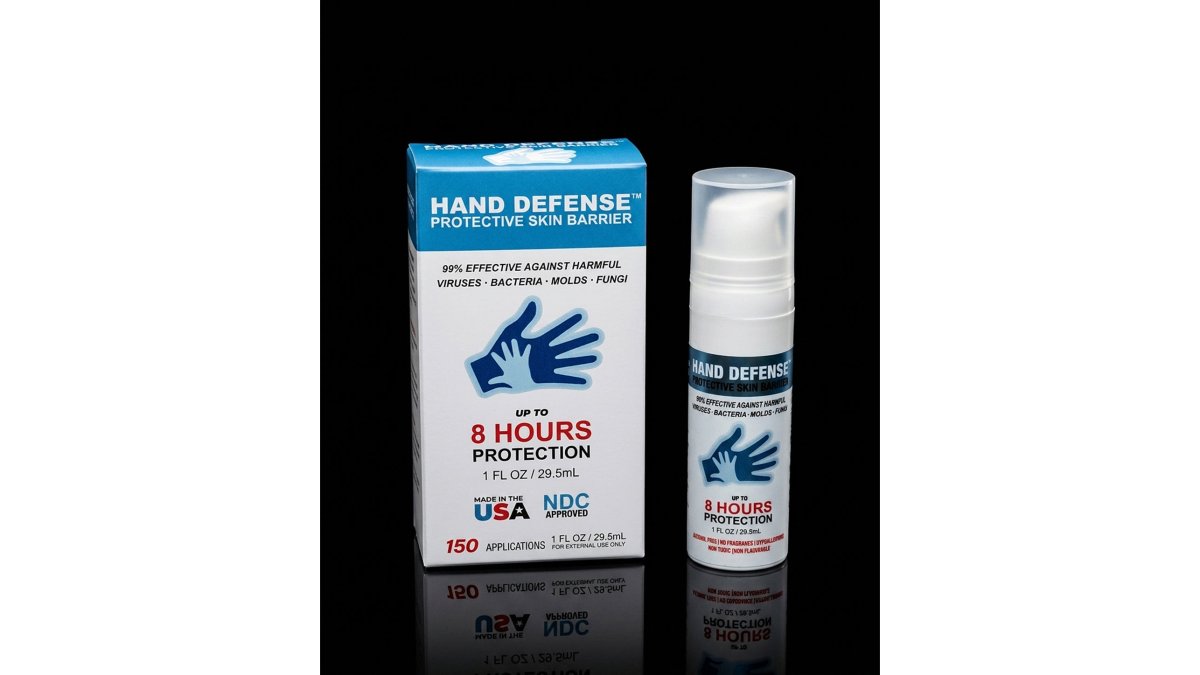
When you're comparing options, the formula matters more than the label. Look for:
- Alcohol-free actives like benzalkonium chloride instead of ethanol
- Humectants and emollients such as glycerin and dimethicone that hold moisture in
- A pH-balanced, fragrance-free base that won't trigger sensitive skin
- A tested, registered formula rather than a generic "natural" claim
The FDA guidance on consumer antiseptic products sets the framework for what counts as a legitimate antimicrobial hand sanitizer, so any product you buy should meet that bar.
Key Ingredients That Keep Hands Hydrated
Hydration comes from two ingredient families working as a system: humectants that pull water into the skin and emollients that seal it there. A good non drying formula uses both, and the ratio between them matters as much as their presence.
Humectants like glycerin, sodium hyaluronate, and panthenol attract moisture from the air and from deeper skin layers.
What most guides miss is the order of ingredients. If a humectant sits near the top of the list but there's no emollient to seal it, the moisture evaporates anyway, sometimes faster than it would have without the humectant, because glycerin can pull water from deeper layers to the surface where it's lost.
How to Read the Ingredient List Like a Formulator
Ingredients are listed in descending order of concentration until you reach 1%, after which order is flexible. That gives you a rough map:
- First five ingredients: the bulk of the formula. If alcohol (ethanol, isopropyl alcohol, SD alcohol) is here, the product will dry your hands regardless of what follows.
- Actives near the top: benzalkonium chloride, ethyl alcohol, or isopropyl alcohol are the only actives the FDA recognizes for consumer hand sanitizers. Everything else is supporting cast.
- Humectants and emollients in the middle: glycerin, dimethicone, and cyclopentasiloxane typically land here at 1-5%.
- Botanicals and fragrance at the end: aloe vera, chamomile, and essential oils are usually present at fractions of a percent. They soothe, but they don't hydrate on their own.
A common pattern is a formula that leads with alcohol, adds a token amount of aloe, and markets itself as "moisturizing." The aloe is doing almost nothing. The alcohol is doing all the work, and all the damage.
What "Non-Toxic" and "Natural" Actually Mean on a Label
Neither term is regulated for hand sanitizers. "Natural" can describe a formula that's 99% water and synthetic preservatives with a single plant extract. "Non-toxic" has no legal definition in this category. What you can verify: the active ingredient and its percentage, the NDC number if the product makes drug claims, and whether the manufacturer discloses the full ingredient list. Those three data points tell you more than any front-of-bottle claim.
Our Hand Defense formula pairs dimethicone and cyclopentasiloxane with benzalkonium chloride, an antimicrobial that doesn't evaporate the way alcohol does.
How to Treat Dry Hands from Sanitizer
Dryness from sanitizing is reversible, and the fix is mostly about timing. The mistake people make is waiting until their hands are already cracked to act.
Start by switching to an alcohol-free, pH-balanced sanitizer so you stop the damage at the source. Then rebuild your skin barrier:
- Apply a thick moisturizer immediately after sanitizing, while hands are still slightly damp
- Use an occlusive balm at night to seal in moisture while you sleep
- Wear gloves for wet work like dishes or cleaning
- Cut back on hot water, which strips oils faster than warm water
If your hands are cracked skin and bleeding, that's a sign to see a dermatologist. Persistent irritation can point to contact dermatitis, which needs more than a drugstore lotion.
The American Academy of Dermatology guidance on hand eczema recommends fragrance-free, dye-free products for anyone with ongoing irritation, which is worth applying to your sanitizer choice too.
Long-Lasting Hand Protection: How It Works
Long-lasting hand protection comes from film-forming technology, not from reapplying every few minutes. Instead of killing germs on contact and evaporating, a film-forming antimicrobial bonds to the skin and keeps working.
This is the part that surprises people. Traditional alcohol sanitizers work for seconds. Once the alcohol flashes off, protection is gone. A film-forming formula creates a persistent antimicrobial barrier that continues reducing bacteria over time, which is why some products advertise hours of protection from a single application.
For anyone sanitizing dozens of times a day, that difference changes everything. Teachers, nurses, and retail staff don't need to reapply after every handshake or door handle. One application covers the gaps between washes.
Alcohol-Free Hand Sanitizer Benefits for Sensitive Skin
The biggest alcohol-free hand sanitizer benefits show up for people with diagnosed skin conditions, and this is where most buying guides stop short. Alcohol is a known irritant that disrupts the stratum corneum, the outermost layer of skin, by dissolving the lipids that hold it together. For most people that's a temporary dryness. For people with eczema, psoriasis, or contact dermatitis, it's a trigger for a flare-up that can take days to calm down.
What the Research Shows About Alcohol and the Skin Barrier
Dermatology literature has documented for decades that repeated exposure to ethanol and isopropyl alcohol increases transepidermal water loss, the rate at which moisture escapes through the skin. Higher water loss correlates with redness, cracking, and increased permeability to irritants. The American Academy of Dermatology's guidance on hand eczema specifically recommends fragrance-free, dye-free products and minimizing exposure to known irritants, which includes alcohol-based sanitizers for people with active flares.
An alcohol-free formula skips that irritation pathway entirely. There's no sting on cracked skin, no burning sensation, and no drying effect that compounds with every use.
Guidance by Skin Condition
Different conditions call for different cautions:
- Eczema (atopic dermatitis): The skin barrier is already compromised. Alcohol-free formulas with glycerin and dimethicone help, but check for fragrance and methylisothiazolinone, a preservative that's a common contact allergen. Patch-test on the inner forearm before daily use.
- Psoriasis: Lesions are thicker and less permeable, so sanitizer stings less on plaques but can irritate the surrounding skin. Alcohol-free is still the safer default, and moisturizing after each use matters more than the formula itself.
- Contact dermatitis: If you've reacted to a sanitizer before, the culprit is usually the alcohol, a fragrance, or a preservative, not the active ingredient. Switch to a fragrance-free, alcohol-free formula and reintroduce variables one at a time.
- Hand eczema from frequent washing ("housewife's eczema"): Common in healthcare, food service, and caregiving. The fix is reducing total irritant load: alcohol-free sanitizer between washes, gentle soap when washing, and an occlusive balm at night.
When to See a Dermatologist
If your hands are cracked and bleeding, if irritation persists more than two weeks with consistent at-home care, or if you develop blisters, oozing, or spreading redness, that's beyond what a drugstore sanitizer swap can fix. Persistent irritation can point to contact dermatitis or a secondary infection, both of which need prescription treatment.
Benzalkonium chloride, the active in many alcohol-free formulas, is effective against bacteria, fungi, and some viruses without the evaporative dryness of ethanol.
Safety and Efficacy Standards to Check
A legitimate hand sanitizer meets defined safety and efficacy standards, and you can verify it. In the U.S., consumer antiseptic washes and rubs are regulated, and products making antimicrobial claims should carry proper registration.
When you're evaluating a non drying hand sanitizer, check for:
- An NDC listing for products making drug claims
- A named active ingredient with a percentage, not a vague "antimicrobial blend"
- Clear directions and warnings on the label
- A stated manufacturer you can trace
Hand Defense is NDC-listed and made in the USA, with benzalkonium chloride 0.1% as its active ingredient. That transparency is what separates a real antimicrobial product from a scented gel with a health claim.
The CDC hand hygiene recommendations remain the baseline for when to sanitize versus when to wash with soap and water, and no product replaces that guidance.
Common Mistakes When Choosing a Sanitizer
Most people pick a sanitizer by scent or brand familiarity, then wonder why their hands hurt by Friday. Here are the mistakes we see most:
- Ignoring the active ingredient. If alcohol leads the list, dryness follows with heavy use.
- Confusing "moisturizing" with "non drying." Added aloe doesn't offset an alcohol base that evaporates.
- Skipping the moisturizer. Even a good sanitizer works better when paired with a barrier cream.
- Assuming a higher price means a better formula. Price tracks brand, not necessarily ingredients.
- Reapplying constantly. A film-forming formula doesn't need it, and overuse irritates skin regardless.
| Mistake | The Fix | Why It Matters |
|---|---|---|
| Alcohol-based formula | Switch to alcohol-free | Stops the drying cycle at the source |
| No moisturizer | Apply balm after sanitizing | Rebuilds the skin barrier |
| Chasing brand names | Read the ingredient list | Formula beats familiarity |
| Constant reapplication | Use a long-lasting formula | Fewer applications, less irritation |
Conclusion
Frequent sanitizing doesn't have to mean cracked, painful hands. The fix is choosing a formula built for skin health from the start, not patching the damage afterward.
Hand Defense makes that choice simple. Our alcohol-free sanitizer uses benzalkonium chloride to reduce bacteria that can potentially cause disease, protects for up to 8 hours from a single use, and skips the alcohol burn that dries out sensitive skin. It's NDC-listed, made in the USA, and water-based, so there's no sticky residue and no water needed.
Get started with Hand Defense and give your hands protection that lasts without the dryness.
Frequently Asked Questions
What ingredients should I look for in a non-drying hand sanitizer?
Look for moisturizing ingredients like glycerin, aloe vera, and dimethicone. Glycerin pulls water into the skin, while dimethicone forms a protective barrier that locks in moisture. Avoid high concentrations of alcohol (ethanol or isopropyl alcohol), which strip natural oils. Instead, consider alcohol-free options that use benzalkonium chloride as the active antimicrobial ingredient. These formulas clean hands without the drying effects of alcohol. Always check the label for skin-friendly additives like emollients and humectants that support the skin barrier.
Is alcohol-free hand sanitizer as effective as alcohol-based options?
Yes, when formulated correctly. Alcohol-free sanitizers often use benzalkonium chloride, which is effective against bacteria. The key is proper application and allowing the product to dry completely. Some alcohol-free formulas provide long-lasting protection. For routine use, alcohol-free sanitizers can be just as effective while being gentler on your skin.
How can I prevent my hands from drying out while using sanitizer?
Choose a sanitizer with built-in moisturizers like glycerin or aloe vera. Apply a pea-sized amount and rub until dry; don't overuse. After sanitizing, follow with a hand cream if needed. At night, use a thick moisturizer and cotton gloves to repair the skin barrier. If you're in a dry environment, use a humidifier. Also, avoid hot water when washing hands, as it strips oils. For frequent sanitizing, an alcohol-free formula with dimethicone can help maintain hydration without a greasy feel.
What is the difference between moisturizing and non-drying hand sanitizer?
Moisturizing sanitizers contain added humectants (like glycerin) and emollients (like dimethicone) that actively hydrate and soften skin. Non-drying sanitizers simply avoid ingredients that strip moisture, such as high alcohol content, but may not add moisture. A moisturizing formula is better for dry or sensitive skin, while a non-drying one is a minimum requirement for regular use. For the best results, look for a product that is both alcohol-free and enriched with skin conditioners to maintain a healthy skin barrier.