


How to Prevent Dry Hands From Sanitizer: A Complete Guide
Table of Contents
- Why Hand Sanitizer Dries Out Your Skin
- Step 1: Switch to the Best Non Drying Hand Sanitizer
- Step 2: Choose Hand Sanitizer for Sensitive Skin
- Step 3: Learn How to Moisturize Hands After Hand Sanitizer
- Step 4: Wash With Gentle Soap and Warm Water
- Handwashing vs Hand Sanitizer for Dry Skin
- Common Mistakes That Make Dry Hands Worse
- Conclusion
- Frequently Asked Questions
Last Updated: October 21, 2026
Why Hand Sanitizer Dries Out Your Skin
Dry hands from sanitizer are the most common complaint we hear about frequent hand hygiene. The fix starts with understanding what alcohol does to your skin barrier, then changing a few daily habits.
Most people assume dryness is the price of clean hands. It isn't. You can sanitize often and still keep your hands soft, as long as you treat the barrier right.
How Alcohol-Based Sanitizer Affects the Skin Barrier
Your skin barrier is the outer layer that holds moisture in and keeps irritants out. Alcohol-based sanitizer strips away the oils and water that keep that layer intact.
Do it ten times a day and the barrier weakens. Hands feel tight, look chalky, and start to crack at the knuckles.
Here's what happens step by step:
- Alcohol evaporates fast, taking natural oils with it
- Repeated use breaks down the lipids that seal in moisture
- Small cracks open the door to skin irritation and stinging
- Dry skin loses its ability to bounce back on its own
The result is chapped skin that stings every time you sanitize again.
Step 1: Switch to the Best Non Drying Hand Sanitizer
The best non drying hand sanitizer skips alcohol and uses skin-conditioning ingredients instead. That single swap removes the main cause of dryness for most people.
Look for an alcohol-free sanitizer built on a water base. Ours at Hand Defense uses benzalkonium chloride as the active ingredient, so there's no alcohol burn and no drying evaporation.

What to check on the label:
- Alcohol-free formula, listed clearly
- Active ingredient named on the Drug Facts panel
- Skin-conditioning ingredients like emollients
- No harsh fragrance load if your skin is sensitive
One pump covers both hands. Because it's water-based, it doesn't leave that sticky film alcohol gels can leave behind.
Step 2: Choose Hand Sanitizer for Sensitive Skin
Hand sanitizer for sensitive skin should be fragrance-light, alcohol-free if possible, and free of ingredients you know trigger a reaction. Skin sensitivity turns ordinary sanitizing into a stinging, red experience, and the fix is usually in the formula, not the frequency.
What to look for on the label
- Alcohol-free formulas, which avoid the drying evaporation of ethanol and isopropyl alcohol.
- Fragrance-free rather than merely "unscented," since some unscented products still contain masking fragrances (the American Academy of Dermatology).
- Short ingredient lists with few dyes, essential oils, or botanical extracts.
- Skin-conditioning ingredients such as glycerin or emollients that offset drying.
Benzalkonium chloride is a common alcohol-free active ingredient. It is gentler on intact skin than alcohol for many people, but it is not right for everyone, and some people develop sensitivity to it with repeated use.
Test a new formula before committing
A quick patch test reduces the chance of a reaction:
- Apply one pump to the back of your hand or inner forearm.
- Wait a few minutes and watch for redness, itching, or stinging.
- If it stings, stop and try a different formula.
- If there is no reaction after a day of normal use, the formula is likely a reasonable fit.
If you have eczema or contact dermatitis
People with eczema, fissures, or contact dermatitis need more than a gentle product. Damaged skin absorbs ingredients differently and reacts faster, so a formula that works for a coworker may not work for you.
A common pattern is to rotate between an alcohol-free sanitizer and gentle handwashing, moisturize after every round, and treat flare-ups early rather than waiting for cracks to deepen. If irritation lasts more than a few days, spreads, bleeds, or shows signs of infection such as warmth or pus, consult a clinician. Individualized clinical advice is appropriate for anyone with persistent or severe symptoms, and a dermatologist can help identify specific allergens if contact dermatitis is suspected.
Step 3: Learn How to Moisturize Hands After Hand Sanitizer
To moisturize hands after hand sanitizer, let the sanitizer dry completely first, then apply a hand cream or ointment while the skin is still supple. Timing and product choice matter more than how much you apply.
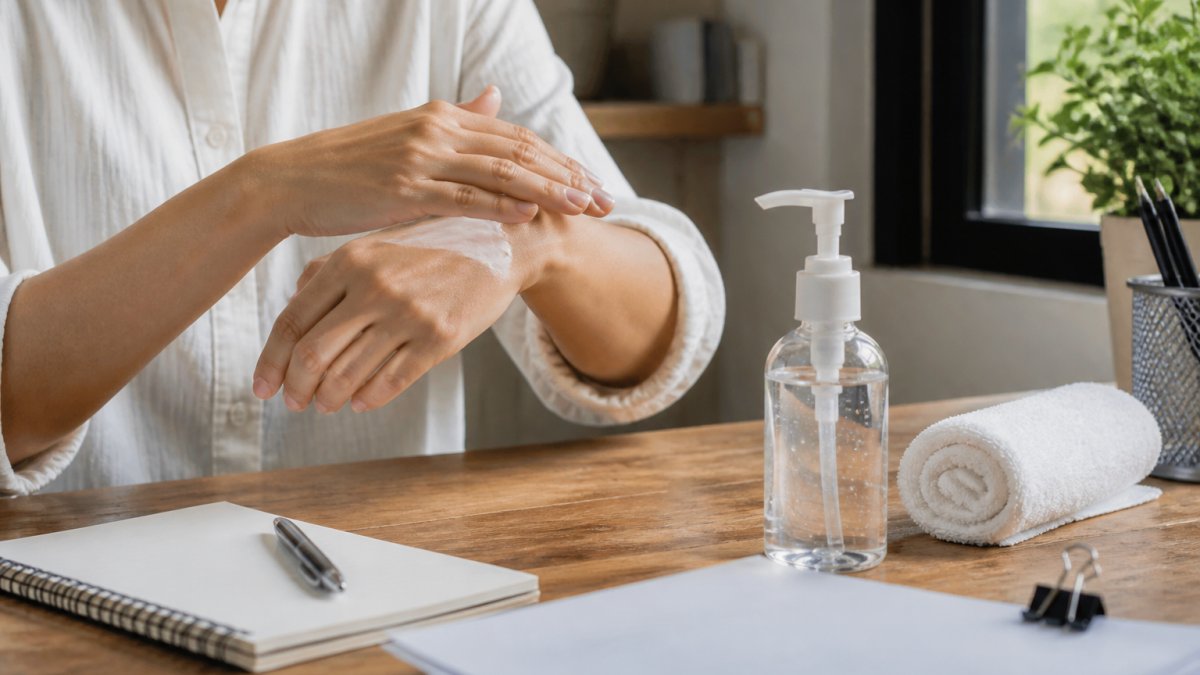
The sanitize-then-moisturize sequence
Most people either moisturize too soon, which dilutes the sanitizer, or skip it entirely. A practical routine looks like this:
- Apply one pump of sanitizer and rub it over all surfaces of both hands, including between fingers and around the nails.
- Let it air-dry completely. Do not wipe or towel off the excess; that removes the product before it has done its job.
- Wait until the skin feels dry to the touch, not tacky.
- Apply a pea-sized amount of hand cream or ointment to the backs of the hands, knuckles, and cuticles, which are the areas that crack first.
- Reapply moisturizer after every two or three sanitizer rounds, or whenever hands feel tight.
A common pattern is to keep the moisturizer next to the sanitizer so the two steps stay linked. If the products live together, the habit sticks.
Match the moisturizer to your skin
The right formula depends on how dry or damaged your hands already are. Think in three categories:
- Lotions are lightest and absorb quickly. They suit mild dryness and daytime use when you need to keep working, but they contain more water and less oil, so they wear off faster.
- Creams sit in the middle. They hold more oil than lotions and are a good default for regular sanitizer users who need lasting moisture without a heavy feel.
- Ointments are the thickest and seal the skin most effectively. They are the best choice for cracked skin, fissures, and overnight repair, but they can feel greasy during the day.
For hands that are already cracked or stinging, an ointment at bedtime and a cream during the day is a common combination. For sensitive skin, choose a fragrance-free formula and patch-test a small area first.
Read the ingredient list
Ingredients do different jobs, and a good hand moisturizer usually combines more than one type:
- Humectants such as glycerin and hyaluronic acid pull water into the outer layer of skin.
- Emollients such as lanolin, shea butter, and fatty alcohols soften rough patches and improve flexibility.
- Occlusives such as petrolatum and dimethicone form a barrier that slows water loss.
Watch for potential irritants if your skin is reactive: added fragrance, essential oils, and some preservatives are common culprits. Alcohol-heavy toners and astringents are not appropriate for dry hands.
Moisturize regularly, not just when hands feel dry. A dab after every few sanitizer rounds keeps the barrier steady all day, and consistency does more than any single product.
Step 4: Wash With Gentle Soap and Warm Water
Handwashing with gentle soap and warm water protects the barrier when you have visible dirt or after using the restroom. Save sanitizer for the in-between moments.
Hot water strips oils faster than warm water, so turn the tap down. Use mild soap rather than harsh antibacterial scrubs.
Then pat dry with a clean towel or paper towel. Rub gently instead of scrubbing, and leave hands slightly damp before you add lotion.
A simple wash routine:
- Wet hands with warm water
- Lather mild soap for about 20 seconds
- Rinse well
- Pat dry and apply hand cream
Handwashing vs Hand Sanitizer for Dry Skin
Handwashing vs hand sanitizer for dry skin comes down to one rule: wash when hands are visibly dirty, sanitize when they're not. Soap and water physically remove grime, while sanitizer reduces germs without water.
For dry, sensitive skin, an alcohol-free sanitizer is often the gentler choice for frequent use. Handwashing with hot water and harsh soap is a common trigger for chapped skin.
| Situation | Best Choice | Why |
|---|---|---|
| Hands visibly dirty or greasy | Soap and water | Removes dirt and oils |
| After restroom use | Soap and water | Physical removal of germs |
| Between washes, on the go | Alcohol-free sanitizer | Gentle, no water needed |
| Sensitive or cracked skin | Alcohol-free sanitizer | No alcohol sting |
| Before eating, hands look clean | Sanitizer | Fast and effective |
Neither method replaces the other. Use both, and let the situation decide which one you reach for.
Common Mistakes That Make Dry Hands Worse
The biggest mistake is sanitizing over and over without ever adding moisture back. A few small habits quietly make dry hands worse every day.
Watch for these:
- Using hot water for every wash
- Rubbing hands dry instead of patting
- Skipping moisturizer because hands "feel fine"
- Choosing a sanitizer with drying alcohol for constant use
- Ignoring cracked skin until it stings
- Exposing bare hands to cleaning products without protective gloves
Fix the routine, not just the product. A gentle sanitizer plus regular hand cream handles most cases of dry skin from frequent hand hygiene.
Conclusion
Frequent hand hygiene doesn't have to leave your hands rough and cracked. Switch to an alcohol-free formula, moisturize after every few rounds, and wash with gentle soap and warm water.
At Hand Defense, our alcohol-free sanitizer is built for exactly this problem. It's water-based with no alcohol burn, protects for up to 8 hours in a single use, and is NDC Listed and made in the USA. It's a gentle fit for sensitive skin, kids, and anyone who sanitizes all day.
Ready to stop the dryness? Add Hand Defense to your cart and give your hands a break from alcohol.
Frequently Asked Questions
Why does hand sanitizer make my hands dry?
Alcohol-based sanitizers work by dissolving the oils and proteins on your skin, and they evaporate quickly. That process strips away some of the natural oils that keep your skin barrier intact, which leads to dry hands, tightness, and chapped skin with repeated use. Fragrance and other harsh ingredients in some formulas can add to the irritation. Switching to an alcohol-free formula and moisturizing regularly are the two most effective fixes.
Is alcohol-free hand sanitizer less drying?
Yes. Alcohol-free sanitizers skip the ingredient that evaporates moisture from your skin, so they are far less likely to leave your hands dry and cracked. Hand Defense, for example, uses benzalkonium chloride 0.1% as its active ingredient and a water-based formula with no alcohol burn. It costs $19.99 and provides up to 8 hours of protection per use, which means fewer reapplications throughout the day.
How often should I moisturize dry hands?
Apply hand cream or ointment after every handwashing and after sanitizer dries, and add a thicker layer at night before bed. If your hands are already chapped, moisturize three to four times during the day in addition to those post-wash applications. Look for humectants like glycerin and hyaluronic acid to draw in water, plus emollients like dimethicone to seal it in. Keep a tube at your desk, in your bag, and by the sink so it is easy to stay consistent.
When should I see a doctor about dry hands from sanitizer?
See a doctor if your hands are cracked, bleeding, or painful, or if redness and irritation persist for more than 72 hours despite switching to a gentle sanitizer and moisturizing regularly. Signs of contact dermatitis, such as a rash, swelling, or intense itching, also warrant a medical visit. A doctor can rule out eczema or an allergy and recommend prescription ointments. Stop using any product that causes irritation or redness right away.